To paint slowly
is to insist on being here.
What I Paused For
What We Almost Missed
Slowness as Resistance
We have always constructed our image of the world — and those constructions have never been innocent.
The Academic painters built idealized illusions, compositions of heroic depth and narrative that had everything to do with power and very little to do with actual light.
The Impressionists walked outside to push back. Claude Monet stood in changing weather, painting what the eye actually encounters before the mind composes it into something comfortable and false.
The photograph promised to solve all of that. An objective record. The moment as it actually was. But a photograph is never neutral — it is framed, selected, contextualized, a truth that quietly becomes a different truth depending on who holds it and why. After two world wars, after the systematic use of heroic imagery in the service of atrocity, a generation of painters understood that the composed, illusionistic image — however beautiful — had been complicit.
The critical argument of that moment cut to the bone: painting that pretends to be something other than pigment on a flat surface is lying about its own nature. And the mechanically reproduced image — however objective it claimed to be — flattens, selects, and ultimately lies about what it means to be present in the world.
Franz Kline's gestures. Mark Rothko's fields. Not representations of the world but proof that a human being was present inside it — consciousness recorded in real time, irreducible, unable to be retroactively composed or propagandized. This was not the abandonment of meaning. It was the insistence on a different and more honest kind.

Now the dominant image is AI — not a selected truth but a hallucination.
A confident fabrication with no original act of seeing behind it, generated at the speed of infrastructure, indistinguishable from the real.
That postwar critique has never been more urgent: the image environment we all move through daily has become illusion so total it no longer knows it is lying.
This work is a response to that.
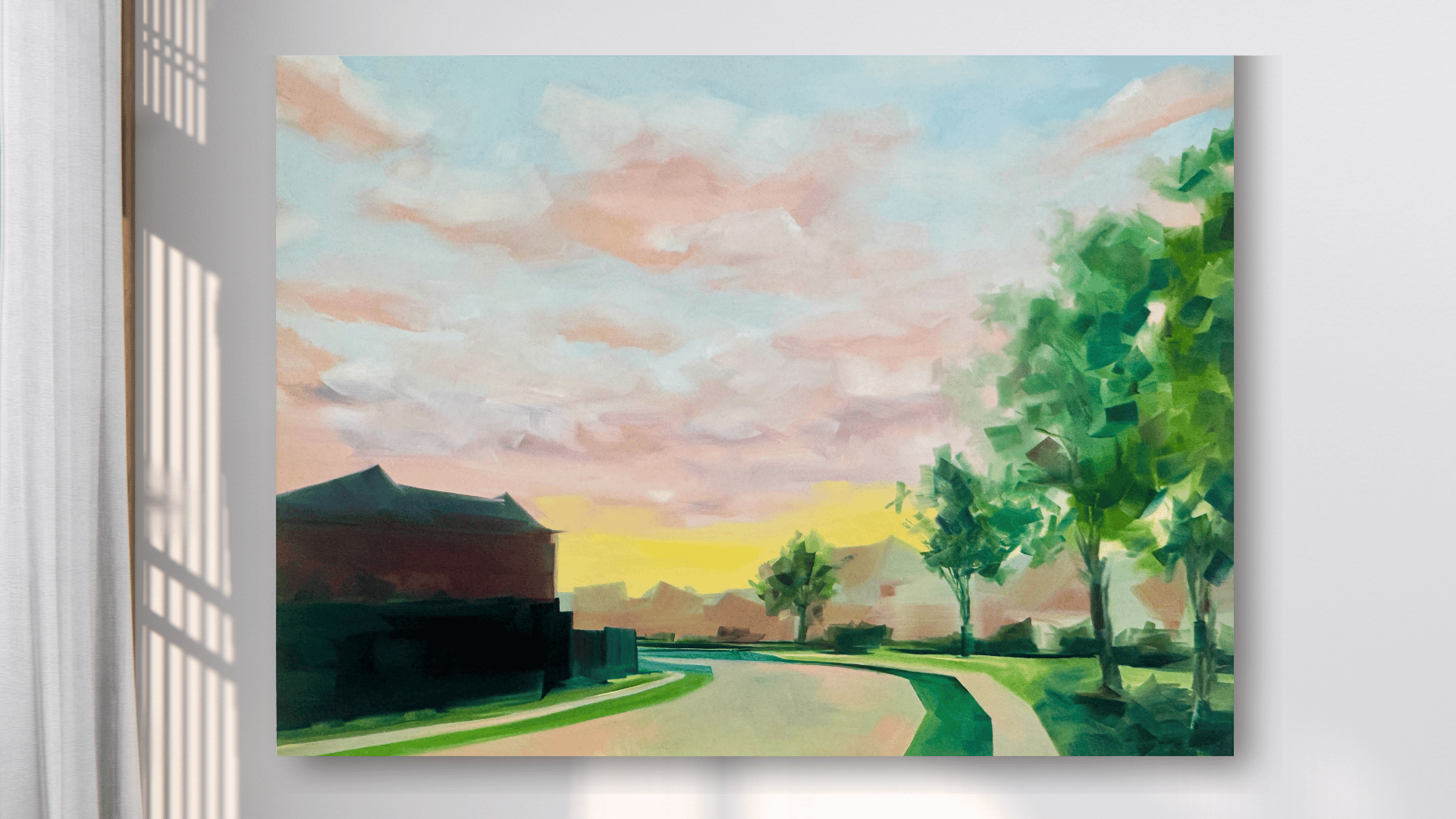
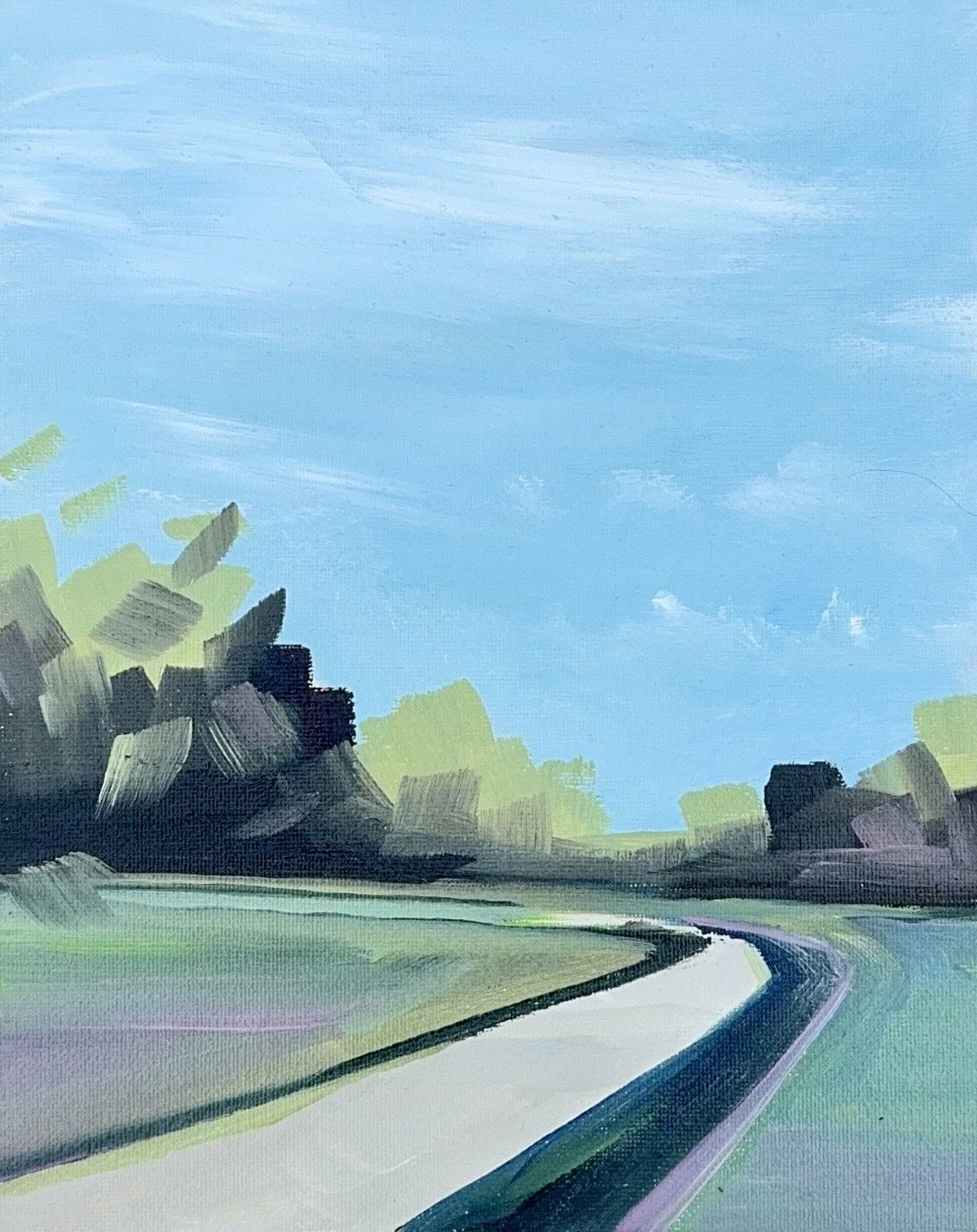
Every morning I run the same suburban trails — Bethany Lakes, Oak Point, Mustang Creek — parks threaded between subdivisions and parking lots in North Texas. Not wilderness.
The closest thing to a natural world that most of us move through in our daily lives.
Curated, maintained, municipally managed, right here. My wild.
That movement generates the first layer of attention: direct, embodied, unrepeatable, mine.
From that observation comes photography —
which catches the moment but never all of it.
From photography comes AI mediation, not to generate images but to break them down.
To expose what the photograph smoothed over.
To fragment and defamiliarize the resolved image until something closer to raw perception remains.
Then that dissolved image is handed to paint.


The final stage is alla prima — wet into wet, completed in a single session.
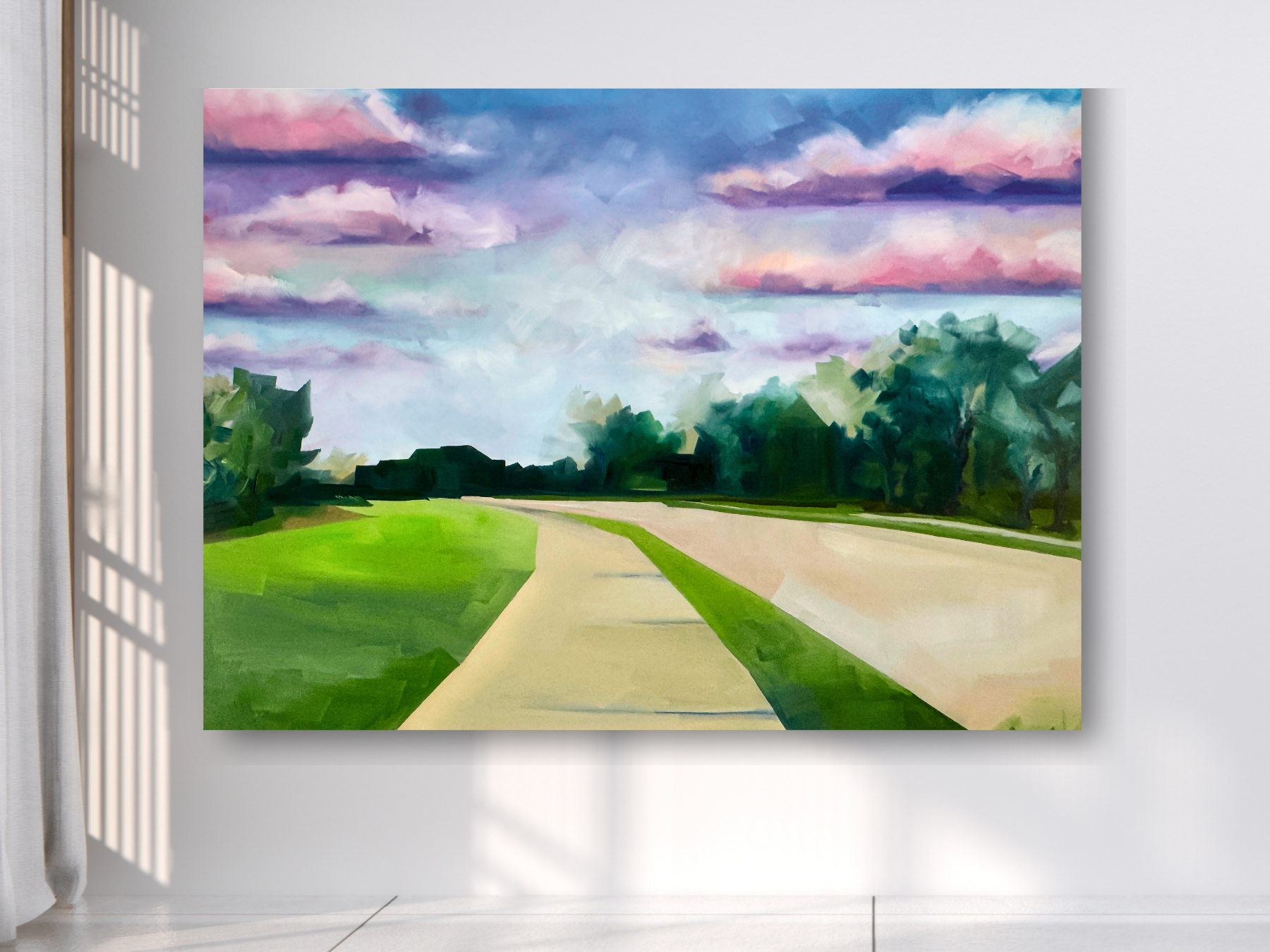
But alla prima is not the whole of it. The mark throughout is allowed to be a mark. The paint is allowed to be paint. A trail curving into treeline is also a surface of pigment that does not pretend otherwise.
This is not illustration — not painting in service of recreating the visible world as convincingly as possible.
It is something older and more demanding: painting honest about its own nature, representational enough to place you in a specific light on a specific morning, and abstract enough to tell the truth about how seeing actually works. Both at once. The tension is the point.

The resulting paintings are quiet. A trail curving into treeline. Clouds held briefly over a retention pond. Light on an ordinary afternoon.
But they are not illustrations of those things. The color pushing warm against cool at the edge of a sky, the mark that describes a treeline without resolving it — these are not in service of depicting the scene more convincingly.
They are where the meaning actually lives. The paint does what the subject alone cannot: it holds the feeling of being present in that light, on that morning, in that body. Slow down and the overlooked becomes strange, worth holding, worth returning to.

This is not only a philosophical argument. Research in neuroaesthetics increasingly confirms what painters have long understood intuitively — that sustained making, slow looking, embodied attention in the presence of art measurably shifts how the brain processes the world. To slow down and look is not retreat. It is resistance at the level of cognition itself.
Each title is not a place name but a fragment of interior life.
A thought, a memory, a face.
The people I love surface during the labor of looking — carried along on the run, present in the studio, woven into the work without ever appearing in it.
The titles map the emotional landscape beneath the visual one. They are the human register the paint alone cannot carry.

To paint slowly is
to insist on being here.
